Remember to bring your binoculars!
430 species. 13 found nowhere else on earth. More than half of all Australian bird species in one stretch of Far North Queensland rainforest.
If you’re a birdwatcher, the Daintree doesn’t just belong on your list. It belongs near the top.
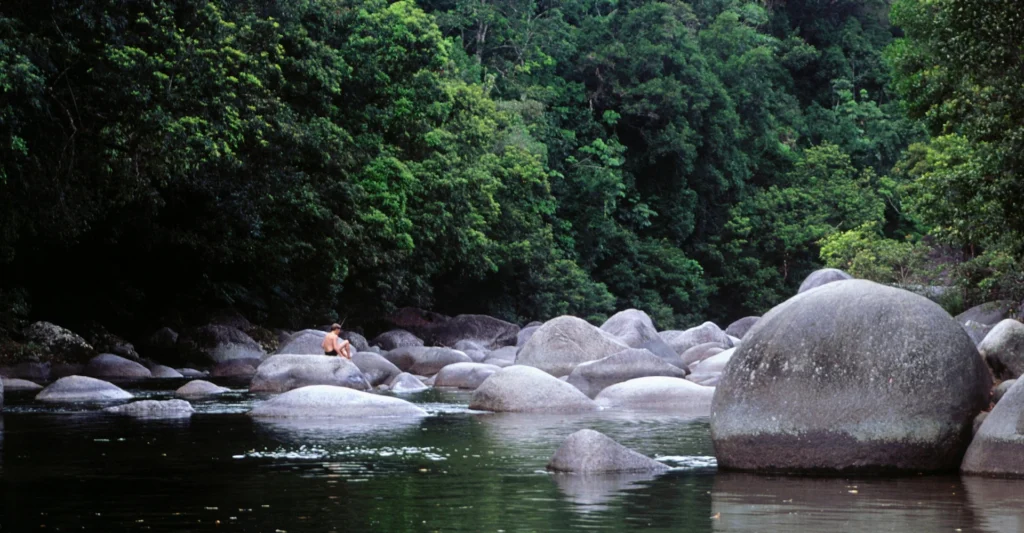
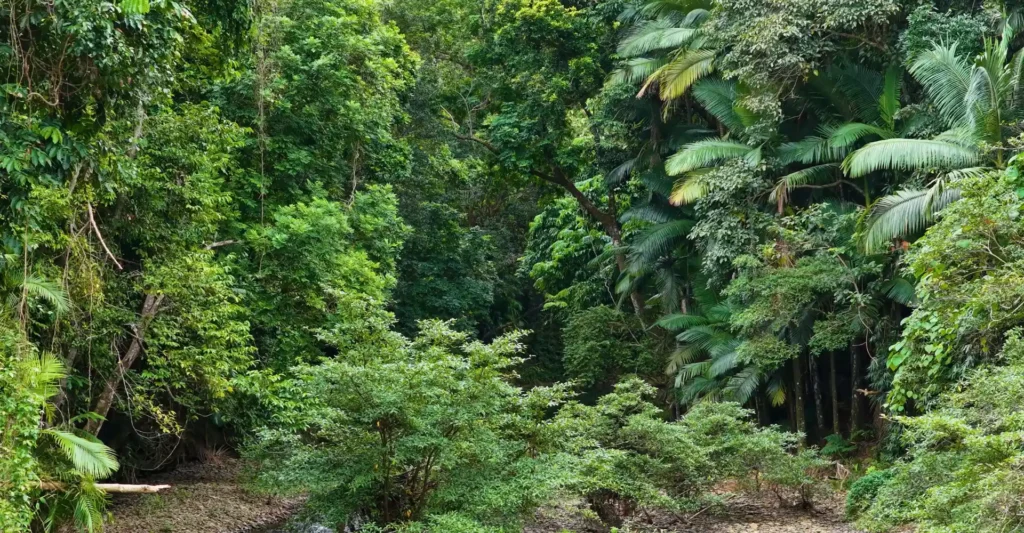
The variety here comes down to habitat. Ancient rainforest, wetlands, mangroves, the Daintree River and its tributaries all sit within a few kilometres of each other, drawing in an extraordinary mix of species from the canopy right down to the leaf litter. Whether you’re chasing the cassowary, ticking off endemics, or just want to know what to look for on a rainforest walk, this guide covers the key birds, where to find them, and the best time to go.
Southern Cassowary

No bird defines the Daintree like the Southern Cassowary. It’s the one most visitors are hoping to see, and with good reason.
Up close, cassowaries are unmistakable. Blue and red bare skin on the neck and head, deep blue-black plumage, heavy legs built for running, and a bony casque sitting like a helmet on top of the skull. Males weigh between 29 and 55kg. Females are larger, reaching up to 76kg. They’re flightless, but don’t let that fool you. They can sprint at speed through dense undergrowth.
They’re most active in the early morning, moving quietly through the forest floor in search of fallen fruit. Cassowaries swallow large fruits whole and pass the seeds intact, which is how more than 150 plant species in the Daintree rely on them for dispersal. Remove the cassowary, and the forest structure starts to shift. These birds aren’t just a great sighting. They’re the reason the rainforest looks the way it does.
On the family side, it’s the males who do the work. A male incubates the eggs for around 50 days, then raises the chicks for up to nine months before chasing them off as the next breeding season begins.
If you encounter one: back away slowly and give it space. Never position yourself between a cassowary and its chicks. Never feed them. A defensive cassowary is genuinely dangerous.
Daintree cassowary numbers are critically low. Estimated at between 1,200 and 1,500 individuals remaining across Australia, they’re listed as endangered under both Commonwealth and Queensland legislation. Road collisions and habitat loss are the primary threats. Seeing one is a privilege worth treating with care.
Endemic Species of the Wet Tropics
Thirteen bird species are endemic to the Wet Tropics bioregion, meaning they exist nowhere else on earth. All 13 can be found in the Daintree. Here are four the serious birdwatcher will want to look for.
Macleay’s Honeyeater
Macleay’s Honeyeater is found only from Cooktown south through North Queensland, making the Daintree one of the best places in the world to see it. Named after the Macleay family, a group of 19th-century naturalists and collectors, it’s a fast, flighty bird that forages through the mid-canopy for insects, spiders and nectar. Quick and omnivorous, you’ll often hear it before you spot it.
Victoria’s Riflebird
Victoria’s Riflebird is one of Australia’s birds-of-paradise, and the male puts on one of the more dramatic courtship displays in the rainforest. Deep iridescent black plumage, a metallic throat patch, and an elaborate wing-spread display that really does need to be seen to be understood. If you’re lucky enough to find a displaying male, stop and watch.
Pied Monarch
Pied Monarch is a small black-and-white flycatcher often spotted in the mid-canopy. The name refers to the colouring, not any royal connection. It moves quickly through the foliage and is worth keeping an eye out for on a slow walk through denser forest.
Lesser Sooty Owl
Lesser Sooty Owl rarely shows itself during the day. It’s nocturnal and cryptic, far more often heard than seen. If you’re planning a night walk, keep your ears open for its descending screech.
Ground-Level Birds
Most people arrive in the Daintree expecting to look up. The smart move is to look down as well.
The Orange-footed Scrubfowl and Australian Brush Turkey are two of the most commonly seen birds on the rainforest floor, scratching through the leaf litter and largely unbothered by visitors. The scrubfowl builds enormous nest mounds of leaf litter, sometimes two metres high, which males tend carefully to regulate incubation temperature.
Closer to water and dense undergrowth, the Red-necked Crake and Bush-hen are more elusive. Patience helps, and a quiet approach helps more. The Noisy Pitta is a different story altogether. Small but brilliantly coloured in green, red and yellow, it gives away its position by tapping snail shells against rocks to crack them open. Once you learn that sound, you’ll start hearing them everywhere. The Emerald Ground Dove is jewel-bright and tends to stay shy, moving quickly and low through the undergrowth before disappearing.
Canopy and Mid-Level Birds
Kingfisher
Buff-breasted Paradise Kingfisher is arguably the most photographed bird in the Daintree. A summer migrant from Papua New Guinea, it arrives in October or November and nests in termite mounds, carving out a burrow with its vivid orange bill. The combination of electric blue, orange and white plumage makes it hard to miss if you’re in the right spot at the right time.
Nine of Australia’s ten kingfisher species live in the Daintree. The Azure Kingfisher is a regular along creek edges and the river, a small bolt of cobalt blue that disappears almost as fast as it appears.
Black Butcherbird
Black Butcherbird lives up to its name. It feeds on insects, lizards and other birds, impaling prey on branches before eating. It looks something like a crow with a heavy hooked bill, and it turns up across both rainforest and mangrove areas. You can often spot one from the Marrdja Boardwalk.

Spotted Catbird
Spotted Catbird is one of the most commonly heard birds in the Daintree. Its call is exactly what the name suggests, a nasal, cat-like screech that echoes through the canopy. Endemic to North Queensland, it’s often close by long before you see it.
River and Wetland Birds
The Daintree River and its surrounding mangroves and wetlands draw a different suite of species to those you’ll find in the rainforest interior. A river cruise is one of the best ways to see this group.
The Great-billed Heron is one of the largest herons in the world, and the Daintree River is one of the few reliable spots in Australia to find one. It stands motionless in shallow water, watching for fish with impressive patience.
The Black Bittern visits in summer, blending into creek edges and riverbanks with cryptic brown-streaked plumage that makes it genuinely hard to spot even when it’s right in front of you. The Mangrove Robin is a habitat specialist, found specifically in mangrove edges rather than open water or rainforest, and worth looking for on any river or estuary cruise.
Book a Daintree River cruise or guided tour.
When to Go and Birdwatching Tips
Best time of day: Dawn through to around 11am is when birds are most active and most vocal. Don’t sleep in. An early start gives you the best chance of sightings across all habitat types, and spring mornings are particularly good, with birds calling and establishing territories.
Summer migrants (October to April): This is when the Buff-breasted Paradise Kingfisher arrives from PNG, joined by the Pied Imperial Pigeon, Metallic Starling, and Channel-billed Cuckoo. The forest is busier and noisier, and species counts tend to run higher.
Winter (June to August): Quieter in terms of bird activity, but excellent visibility and cooler conditions make walking far more comfortable. Wompoo Fruit-Doves and Spotted Catbirds feed heavily on Blue Quandong fruits, and raptors begin nesting. For some species, this is actually the better time.
Equipment: Bring binoculars. A field guide specific to the Wet Tropics makes a real difference for identification, and the Daintree Discovery Centre stocks one on site if you don’t have one.
Guided vs self-guided: A guided walk or river cruise will significantly lift your species count. Local guides know where to look and what to listen for. If your time is limited, go guided.
See the Daintree’s Birds for Yourself
The Daintree is one of the genuinely great birdwatching destinations in the world. Not just great for Australia, great globally. Four hundred and thirty species across a compact and accessible stretch of ancient rainforest, wetlands and river gives you a variety that few places on earth can match.
The best way to make the most of it is with a guided day in the region. Our 1 Day Cape Tribulation and Daintree Rainforest Tour and 2 Day Cape Tribulation and Daintree Rainforest Tour both take you deep into the rainforest with guides who know exactly where to look. Get out there early, keep your eyes on the ground as well as the canopy, and you might just spot a cassowary before breakfast.
Frequently Asked Questions
How many bird species are in the Daintree Rainforest?
Over 430 bird species have been recorded in the Wet Tropics region, which includes the Daintree Rainforest. That’s more than half of all bird species found across Australia, concentrated in one stretch of Far North Queensland.
What birds are endemic to the Daintree?
Thirteen bird species are endemic to the Wet Tropics bioregion and can all be found in the Daintree. These include the Macleay’s Honeyeater, Victoria’s Riflebird, Pied Monarch, Spotted Catbird, and Lesser Sooty Owl. These species exist nowhere else in the world.
Where can I see a cassowary in the Daintree?
Cassowaries move through rainforest areas throughout the Daintree, particularly around Cape Tribulation and the Cape Tribulation section of Daintree National Park. They’re most active in the early morning. Your best chance is a slow, quiet walk through rainforest at dawn, or a guided tour with a local who knows the regular sighting areas.
What is the best time to go birdwatching in the Daintree?
Dawn to around 11am is the most productive window, when birds are active and vocal. For summer migrants including the Buff-breasted Paradise Kingfisher, visit between October and April. Winter (June to August) offers excellent visibility and comfortable walking conditions, with fruit-doves and raptors particularly active.
Is the Southern Cassowary endangered?
Yes. The Southern Cassowary is listed as endangered under both Commonwealth and Queensland legislation. Estimated numbers sit between 1,200 and 1,500 individuals remaining in Australia. Road collisions and habitat loss are the primary threats. If you see one, keep your distance and never feed it.
What kingfishers live in the Daintree Rainforest?
Nine of Australia’s ten kingfisher species live in the Daintree. The Azure Kingfisher and the Buff-breasted Paradise Kingfisher are among the most commonly seen. The Little Kingfisher is also present, one of the smallest kingfishers in the world and well worth looking for along creek edges.
What ground birds can I see in the Daintree?
The Orange-footed Scrubfowl and Australian Brush Turkey are common on the rainforest floor and easy to spot. The Noisy Pitta is smaller and more striking, bright green, red and yellow, often heard tapping snail shells. The Red-necked Crake, Bush-hen and Emerald Ground Dove are also present, though more elusive.
Do I need binoculars for birdwatching in the Daintree?
Yes. The rainforest canopy is dense, and many species sit high in the trees or move quickly through the undergrowth. Binoculars make a significant difference to how much you’ll see. A Wet Tropics field guide is also handy for identification, and one is available at the Daintree Discovery Centre.
Other Tips & Articles